Showing posts with label first time buyers. Show all posts

Monday, 7 August 2023

The True Cost of a Bad First Impression When Selling Your Clapham Home

First impressions matter, and this is especially true when it comes to selling your home. A bad first impression can cost you thousands of pounds, as potential buyers are more likely to make an offer below the asking price or even walk away altogether. If they even walk through the door! An overpriced property in any market will not attract any viewings from the portals to start with!


There are a number of things that can contribute to a bad first impression, such as a cluttered or dirty home, a bad smell, or a lack of curb appeal. Even something as simple as a messy driveway or unkempt garden can turn off potential buyers.


A study by eXp UK found that 69% of potential buyers would not consider a second viewing if they had a bad first impression of a property. The study also found that 31% of buyers would offer up to 10% less than the asking price on a property that made a bad first impression. eXp UK, the platform for personal estate agents, surveyed over 1,000 UK homebuyers to have purchased over the last year. They found that:


  • A shabby exterior or interior is the most likely thing to make a bad first impression, with 43% of buyers saying this would be a deal-breaker.
  • The size of the property is also important, with 35% of buyers saying they would be less likely to buy a property that was too small.
  • A bad smell is another major turn-off, with 25% of buyers saying they would not consider a property that had a bad odor.
  • An unkept front garden is also a major negative, with 20% of buyers saying this would make them less likely to buy a property.

eXp UK also found that a bad first impression could cost you up to £60,000 in the current market. This is because potential buyers are more likely to make an offer below the asking price if they have a bad first impression.


So, what can you do to avoid making a bad first impression when selling your home? Here are a few tips:


Start by decluttering and cleaning your home. This means getting rid of any unnecessary furniture, belongings, or decorations. You should also clean all surfaces, including the floors, walls, and windows.

  • Make sure your home is well-lit. This will make the space feel more inviting and spacious. You can use natural light by opening up the curtains and blinds, or you can use artificial light by adding lamps or overhead fixtures.
  • Get rid of any bad smells. This could mean cleaning up pet accidents, cooking food that doesn't have a strong odor, or using an air freshener.
  • Pay attention to curb appeal. This means making sure your home looks its best from the outside. You should trim the hedges, mow the lawn, and wash the windows.

By following these tips, you can avoid making a bad first impression and increase your chances of selling your home for a good price.


Here are some additional tips to help you make a good first impression when selling your home:


  • Stage your home. This means arranging the furniture and décor in a way that makes the space look its best. You can hire a professional stager to help you, or you can do it yourself.
  • Take good photos of your home. These photos will be used in your online listings, so it's important to make sure they are high-quality and well-lit.
  • Be prepared to answer questions. Potential buyers will likely have a lot of questions about your home, so be prepared to answer them honestly and in a timely manner.
  • Be friendly and welcoming. The first impression you make on potential buyers will be lasting, so make sure you are friendly and welcoming when they arrive.
  • By following these tips, you can make a good first impression and increase your chances of selling your home quickly and for a good price.


Are you curious about the value of your home in South London? Why not drop me a line or check out my free online valuation tool!


I am an experienced estate agent in South London, and I would be happy to help you get the best possible price for your property. I can provide you with a free online valuation, and I can also help you market your property to the right buyers.


Friday, 4 August 2023

Generation Stuck Remain Priced Out of the South London Property Market

Rising numbers of prospective homebuyers in South London remain priced out of the market without any hope of getting onto the housing ladder, according to research from Allbricks. The research found that the average house price in South London is now £500,000, which is nearly double the average national average. This means that it is now impossible for many people to save for a deposit, let alone afford the monthly mortgage payments.


The report also found that the number of first-time buyers in South London has fallen by 40% in the past five years. This is a trend that is being seen across the UK, as the housing market becomes increasingly unaffordable. The rising cost of housing is having a significant impact on the lives of young people. Many are now forced to live with their parents or in shared accommodation, while others are being priced out of the area altogether.


In 2023, the average full-time worker will pay 7.8 times their annual earnings for a home, but it was 3.5 times in the 90s. This leads to the realisation that most of us are renting our lifestyles. When you do the calculations, most of them can’t afford to buy the homes they’re renting. 

But is this a bad thing? Not really. Apart from the idyllic fantasy of owning your own home I don't see why someone in their 20s would want to tie themselves down with a mortgage as they are likely going to want to enjoy a bigger property fairly soon, or a different location. Having a workforce that is able to move quickly is a benefit for the economy. Perhaps this realisation will sink in and benefit the bounceback of the UK economy as a whole (providing the young workforce doesn't go overseas)!


Monday, 17 July 2023

Is Your Front Door Colour Putting Off South London Property Buyers?

Price/colour?

You'd think it's an odd thing, that the colour of your front door will impact the overall price of your home, but... Property firm Nested commissioned a survey of 1,000 UK homebuyers and found that 94% admit that the colour of a front door has an impact on the overall appeal of a home’s external aesthetic.

What’s more, half of buyers said that door colour has some influence in their decision to either buy a home or look elsewhere.The plot thickens!


Boring?

No surprise but grey is boring, and safe! 18% argued that it was their colour of choice. Other popular choices were black (18%), blue (16%), green (16%), and white (11%). The least popular door colour is brown (3%). Apparently an aesthetically appealing home commands a premium, with 41% of buyers admitting to paying more for a property that looked good. Alice Bullard, Managing Director at Nested, commented: “It’s strange to think that something so simple as the colour of a front door could sway someone’s decision to buy a home and the reality is that the door itself can be easily changed, but it’s the overall first impression it adds to that is of the utmost importance when looking to attract a buyer."


Buyers are in control

Especially in a market such as today's where buyers are stretched for affordability and they want "ready to move in to" properties having all the boxes ticked is a definite yes-yes as opposed to no-no, so if you're looking to sell then painting the front door is the least you should be prepared to do!

If you are looking to maximise the value of your home in today's market then stay tuned for more advice coming your way, from decluttering to staging the property for maximum results, I'll cover all these topics in the coming few weeks.

Personally I'm not sure that colour itself is off-putting, it can certainly be a statement and if done correctly with complimenting colours any colour could work, as long as it's fresh! In summary I do think correlation, not causation! If you're looking for a quick online valuation then check out my online valuation tool or drop me a line and have me over for an in-person valuation if you're looking to sell or let.

Friday, 14 July 2023

Worried about First Time Buyers in South London

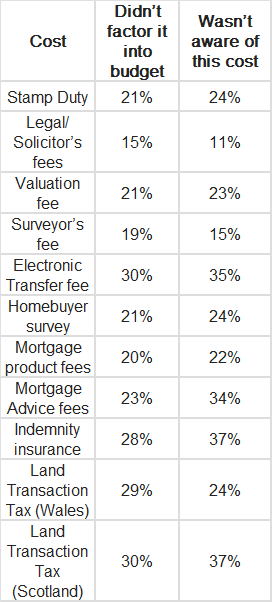
 In a shocking news: a survey from The Mortgage Lender has revealed that nearly a quarter (24%!!!) of First Time Buyers did not know that they would have to pay stamp duty when buying a home!


I mean can you Adam and Eve it? You are about to undergo arguably the biggest, most important purchase of your life and you haven't researched it to the nines? Other things that buyers revealed they didn’t factor into their budget when buying their first home include solicitor’s fees, valuation fees, surveyor’s fees, and the cost of a homebuyer survey.


Have a look at the table below and see how uneducated the average first time buyer is today...


You would think in this day and age of technology and information these sorts of things could be practically absorbed via osmosis, but sadly it's clearly too much information for the average first time buyer to handle. Thankfully I have not had to speak to any first time buyers in the last years who were unaware of these. Service charges are at the top of buyers' agendas these days, with leasehold charges spiralling onwards and upwards having a reasonable service charge for a reasonable level of service is of key concern to many buyers as affordability levels are currently stretched.

So what are the agents doing to educate? Thankfully there are good agents out there that insist that buyers look at mortgages and assess affordability before viewing in order to prevent wasted efforts, time and above all heartbreak when they find their dream property is out of reach. In my experience this journey (the affordability journey) ensures there's enough money to pay for the one-off fees as well as ongoing fees and maintenance.

Crisis averted! You would think....

Monday, 19 June 2023

I don't want to buy a property

Nope

I haven't bought a new property since 2018. I enjoyed the cashflow from my investments extensively for a few years (well, let's just say up to the point a global sniffle shut the world down). Out of all the investments I've made over the years I must say that property has, and continues to serve me well. The actual ownership of property not so - hear me out.


I don't like paying for repairs.

On my rental properties I see it as a cost of business. It's a simple equation. Rent comes in, costs go out, I reinvest the profits - be it at the local bookies or otherwise. But living in my own property - I don't like being unable to move. I don't like being tied down. And that is exactly why I wouldn't buy a property to live in, unless I'm dead set on staying somewhere for at least 10 years; because that is roughly the amount of time you'll need these days to wash the costs involved with moving. Banks, conveyancers, estate agents - everyone gets paid before you do, so any equity you may have created dwindles away quite quickly if you need to sell up before 5-10 years have past. Of course this depends on a lot of factors, but over the past 5 years I've seen zero growth in my rental properties for example - a zero sum game. In fact I've just agreed a sale at exactly the level I refinanced one out at in 2018. Surprised? Well, we have had a pandemic and a mass exodus from London over that time, and my properties aren't exactly first time buyer flats (I trust that had I purchased smaller units they would prove more popular) which would have seen a bit higher demand. The 5 yearly rigmarole of refinancing really gets my goat as well. Other countries in Europe or even the USA offer 25-35 year fixed terms, negating the need for income reassessment, changes in rates, unnecessary red tape to create industries, the list goes on.


Long term

We've just had half a decade of turmoil in the property market. So if you're a first time buyer just think long and hard what you'd do if you had to move tomorrow for your job etc. What would you do with this shiny new flat? Sell it? At a loss? Let it? probably at a loss. Rent it out? Hmmm, not really because you need the rent to be 145% of the gross rental amount. Unlikely this will be attained if you've taken out a 65% or higher loan to value mortgage.


The right time?

Perhaps now is exactly the right time to buy if you're a first time buyer (investment or live-in) if capital growth is your game. Be aware that we've seen little to no capital growth over the last few years (certainly not if you're looking to break even after fees and stamp duty and so on). If a mortgage however means security for you that you won't have to move until you want to (rather than a landlord giving you notice) perhaps it is right for you. Just be aware that if flexibility is a concern, just think that the mortgage payment outgoings are not necessarily going to be less than what you pay in rent. If you are thinking of purchasing a property - for investment, to live in, whatever - and you need some advice, reach out! I've been involved in letting, selling, buying and renting property in South London for 20 years now and I'm happy to share my expertise. Find me on linkedin, instagram, or old fashioned email: jeroen@claphampropertyblog.com

Thursday, 1 June 2023

The return of 100% mortgages - a sign for trouble ahead?

The past

Do humans ever learn from experience? If you remember back in 2008 we had a catastrophic collapse of the property market and guess who suffered - yes, exactly - those that were highly geared and were stuck in negative equity situations. They became mortgage prisoners, unable to move. This simply because prices dropped suddenly and if they were unlucky enough to become unemployed overnight they'd be unable to move somewhere cheaper and sell their property if it all became too much.


A frequent occurrence

It would seem that this isn't putting off Joe Public from wanting to get on the housing ladder. After all, there's no end of free money to make that happen, what with help to buy loans and free stamp duty and all the rest of it. This, in combination with landlords being persecuted by the taxman and regulations up to here (points to forehead level) a mass selloff in combination with some free money is the perfect recipe to get more renters on to the property ladder. That's what they want, right?


But then what?

I see this all the time. First time buyers stretch budgets, borrow from mum, dad, HTB, various other means and then move in to a pukka pad in an amazing location. Then life happens. They want to live with their significant other, or perhaps if they have already bought together they want a dog/balcony/spare room/change of area. OK let's sell it and buy another one" you would think. Well here comes the problem. Most of the time first time buyers are tempted by the shiny newness and incentives of new build apartments. These are much the same as brand new cars when you drive them off the forecourt. You guessed it... even if they were to sell it 2 years later for exactly the same money you now have to factor in estate agency fees to sell, stamp duty to buy a new place and NO incentives whatsoever. Property number 2 becomes a LOT harder to move to financially speaking, unless you have received a somewhat handsome pay rise and can afford to borrow more or you've had some other cash lump sum windfall. So they can't sell, "no problem, we'll rent it out" they say. Nope. You will be unlikely to cover the mortgage repayments with the rent, maybe just, but you'd only get a consent to let. Eventually you'd have to switch over to a full on buy-to-let mortgage if you're not living there. And they are normally 75-80% loan to value maximum, with another fly in the ointment, the rent must be 145% of the interest only mortgage payment. VERY unlikely to happen given the high gearing!


The end

So in summary they're stuck. It's a quick fix to get young people on the housing ladder, but I think they will find that when life changes - and it does when you're young - you need to be flexible. And once you add up all the costs (solicitors, agency, stamp duty, valuations, list goes on) you're not (much) worse off renting. Besides, there's a lot of small print with these mortgages. You can't just have rented a room and proved a good track record, you have to have rented the whole property and been responsible for all the bills. Careful consideration should be made to commit to a mortgage - especially in a day and age where people of first time buying age can't even commit to a date. That said it's a great time to sell your property as so many people are keen to buy. If you are looking to make a move and venture to pastures new I'd love to hear about it. If you are after a free market appraisal with a view to marketing your property for sale or let I'd only be too happy to come and have a look at it. Email me at jeroen@claphampropertyblog.com or pop your property details in my online valuation tool!

Wednesday, 12 December 2018

Clapham First Time Buyers Need 15.2 Times Annual Salary to Get on Housing Ladder


What is it to be British? Our stubbornness, long-suffering stoicism, our vexation at injustice, our obsession with football and rugby, we are weather obsessed external awkward noncommittal modest people whilst underneath seething like a volcano because someone jumped the queue….. and our No.1 obsession is with the property ladder.


This ‘love affair’ with owning our own home has been both good and bad for the UK as a whole; giving people financial freedom in their later years whilst also reducing the quantity (and quality) of housing provision whilst adding the extra pressure of a ‘them and us’ society. Strong words I know .. but let me explain more.


I honestly believe that most Governments since the end of the 1970’s, Conservative and Labour, have attempted to nourish our addiction to home ownership (to keep the housing market on track) with the Council House Right to Buy sell off in the 1980’s, tax relief of mortgages, relaxation of the mortgage rules in the late 1990’s/early 2000’s and most recently, the Help to Buy scheme.


But the Brits haven’t always had this obsession.


Roll the clock back 100 years and, in 1918, just under a quarter of all Brits owned their own homes and the other 77% rented. Go back 50 years to 1968, and only 46% of people owned their own home, the rest rented. This homeownership thing is quite a recent phenomenon.


According to my research, anyone looking to get a foot onto the property ladder as a first-time buyer in Clapham today, AS A SINGLE PERSON, would need to spend 15.2 times their earnings on a Clapham first time buyer property.


Using the numbers from the Office of National Statistics (ONS), the average value of a first-time buyer property in Clapham today is £400,000, compared to £212,500 in 2007. If we divide those property values by the average annual earnings of first time buyers - in 2007, that was £23,426 pa and that has risen to £26,235 pa .. giving us the ratio of 15.2 to 1.


However, what must be remembered is that these are raw statistics from the ONS and don’t take into account other factors, like most people buy their first home as a couple. Also, mortgage rates are at an all-time low and who can remember mortgage rates of 15%+ in the 1990’s, meaning borrowing today is relatively cheap. Also, 95% Loan to Value first time buyer mortgages have been available since the end of 2009 (i.e. you only need to save a 5% deposit) and first time buyer rates of 2.19% fixed for 5 years can be obtained (correct at time of writing this article)… it is cheaper to buy than rent .. fact!


I believe there has been a mind-set change to owning a home. Home ownership was the goal of the youngsters in the latter half of the 20th century. Britain is changing to a more European model of homeownership, where people rent in early to mid-life, wait to inherit the money from their parents when in their 50’s and then buy.. thus continuing the circle - albeit in a different way to the last Century.


This means the demand for privately rented accommodation will, in the long term, only continue to grow. If you would like to know more about where the hot spots are for that growth in Clapham, then one place would be my property blog http://www.claphampropertyblog.com/ or if you want to drop me an email or telephone call, feel free to pick my brain on the best places to buy (and not to buy) in Clapham to ensure your rental investment gets you want you want. The choice is yours!


Do let me know if you are looking to invest and you could use a hand. if you are a ready and able investor sign up to my list that will bring packaged deals to your inbox! If you are looking for no-obligation advice then drop me a line and let's start the conversation.


Monday, 24 September 2018

The Clapham Bank of Mum and Dad Lent £7.82m Last Year


My analysis has shown that up to the end of the last quarter, Clapham first time buyers purchased 221 Clapham properties. With wages rising at 2.8%, unemployment at a low rate of 4.2% (down from 4.6% from a year earlier and the joint lowest since 1975), national GDP rising at 1.87% and inflation at 2.3%, tied in with indifferent house price growth (compared to a few years ago), this has given first time buyers a chance to get a foot hold on the Clapham property market.


Over the last year, the average purchase price of a Clapham first time buyer property has been £500,300 and the average deposit was £81,049. Furthermore, my calculations show the average Clapham parents contributed £35,459 of that £81,049 figure.


You see “The Bank of Mum and Dad (Clapham Branch)” is for countless Clapham twenty something’s, perceived to be the only way they will ever be able to afford their first home. In fact, Clapham parents put up a substantial £7.82m in the last 12 months to help their nearest and dearest progeny onto the property ladder. This assistance towards the deposit makes a huge difference, enabling Clapham youngsters who thought they couldn’t get on the housing ladder more able to do so.


With mortgage rates at all-time lows, few Clapham twenty something’s would struggle to make mortgage repayments, but it is the requirement of the deposit which is the issue, although as parents (and grandparents) are helping out where they can, it does little to address the real problems of the housing market, whether for people renting or buying their first home.


If you think about it, as a Country we have been fortunate that the older generation who control the biggest share of the nation’s wealth are so plentiful to those following after. We need to remember, though, that this generosity is
 a sign of the issues of the British housing shortage, not its solution.


But before I leave this article … note I used the word PERCEIVED in a previous paragraph. Yes, the average first time buyer deposit is 16.1%, but that is an average. Did you know 95% mortgages returned to first time buyers in late 2009 and have been available ever since? Also, lenders like Barclays and many local Building Society’s now offer 100% mortgages (i.e. no deposit) at 2.75% fixed for three years.


The perception is you need 15%, 20% even a 25% deposit to be a first-time buyer – you don’t! You don’t need any deposit, but (there is always a but!)...


Over the last decade, many renters have upgraded themselves into homes that they (or any generation before them) could never have ever afforded as a first time buyer in the past. You see the British housing market started to change with the dawn of the new Millennium and I am seeing a slow but steady attitude change when it comes to renting. Those tenants have found the price difference of upgrading from the typical 1970’s TV show Rigsby “Rising Damp” style rental property to plush terraced house or even semi-detached home, with all the mod cons, comparatively inexpensive (when compared to the increase in mortgage payments if they had to make the move as buyers).


Renting isn’t seen as the poor man’s choice, as many young (and increasing older) people are becoming more at ease and comfortable with the flexibility offered by private renting a property rather than jumping ‘lemming like’ into home ownership. Clapham landlords will continue to see growth in sector, and like Germany, todays renters will become homeowners in 20 years’ time – when they will inherit the wealth of their parent’s home.


Do let me know if you are looking to invest and you could use a hand. if you are a ready and able investor sign up to my list that will bring packaged deals to your inbox! If you are looking for no-obligation advice then drop me a line and let's start the conversation.


Sunday, 18 March 2018

210 First Timer Buyers in Clapham Bought Their First Home in 2017


A little bit of good news this week on the Clapham Property Market as recently released data shows that the number of first time buyers taking out their first mortgage in 2017 increased more than in any other year since the global financial crisis in 2009. The data shows there were 210 first time buyers in Clapham, the largest number since 2006.


I expect in 2018 that this increase of first time buyers will level out and maybe dip slightly as, nationally, figures demonstrate that first time buyer’s average household income was £40,691 and this represented 17.3% of their take home pay. Although, it might surprise readers that it is actually cheaper to buy than it is to rent at the ‘starter home’ end of the housing market. Many of you can remember mortgage rates at 12% ... even 15%. Today, at the time of writing this article, I found on the open market, 189 first time buyer mortgages at 95% (meaning only a 5% deposit was required) with 3 year fixed rates from a reputable High Street bank at 2.49% ... they even did a 3 year fixed rate 100% mortgage for 2.89%!


Interestingly, looking at the other end of the market, the buy-to-let investment in Clapham was subdued, with only 44 buy-to-let properties being purchased with a mortgage. However, I must stress, whilst there is no hard and fast data on the total numbers of landlords buying buy-to-let, as HM Treasury believes only 30% to 40% of buy-to-let property is bought with a mortgage. This means there would have been further cash only buy-to-let purchases in Clapham – it’s just that the data isn’t available at such a granular level.


In terms of the level of mortgage debt in Clapham, looking specifically at the SW4, SW11 and SW12 postcodes, you can see from the graph there has been a steady rise in borrowing over the last few years.


This is pleasing to see, as new mortgage debt is created by first time buyers, buy-to-let landlords and home movers themselves, that is being roughly equalled by the amount being paid off with mature mortgaged homeowners in their 50’s and 60’s finally paying off their mortgage.


So, what does all this mean for the Clapham Property Market? Well, the stats paint a picture, but they don’t inform us of the whole story. The upper end of the Clapham property market has been weighed down by the indecision around the Brexit negotiations and rise in stamp duty in 2014, when made it considerably more expensive to buy a home costing more than £1m. The middle part of the Clapham property market has been affected by issues of mortgage affordability and lack of good properties to buy, as selling prices have reached the limit of what buyers can afford under existing mortgage regulations. The lower to middle Clapham property market was hit by tax changes for buy-to-let landlords, although this has been offset by the increase in first time buyers.


If you are in the market and selling now and want to ensure you get your Clapham property sold, the bottom line is you have to be 100% realistic with your pricing from day one and you might not get as much as you did say a year ago (but the one you want to buy will be less – swings and roundabouts?). I know it’s not comfortable hearing that your Clapham home isn’t worth as much as you thought, but Clapham buyers are now unbelievably discerning.


So, if you are thinking of selling your Clapham property in the coming months, don’t ask the agent out a few days before you want to put the property on the market, get them out now and ask them what you need to do to ensure you get maximum value in the shortest possible time. I, like most Clapham agents, will freely give that advice to you at no cost or commitment to you.


I hope you enjoyed reading. If you are keen to take things further, be it to start from scratch, or do something a bit more interesting with your current portfolio... Start the conversation on email. I'd love to meet you in person of course at this month's Clapham Property Meet, so do come along. Click here for tickets and more info.

Monday, 15 January 2018

Youngsters unable to buy their first home in Clapham – Are the Baby Boomers and Landlords to Blame?


Talk to many Clapham 20 something’s, where home ownership has looked but a vague dream, many of them have been vexatious towards the Baby Boomer generation and their pushover ‘easy go lucky’ walk through life; jealous of their free university education with grants, their eye watering property windfalls, their golden final salary pensions and their free bus passes.


If you had bought a property in Clapham for say £30,000 in first quarter of 1977, today it would be worth £907,667, a windfall increase of 2925.56%.


But to blame the 60 and 70 year olds of Clapham for that sort of rise seems a little unfair, with the value of the homes rising like rocket, I don't believe they can be censured or made liable for that. A few weeks ago, I discussed in my blog the number of people in the Clapham area who have two or more spare bedrooms (meaning they are under-occupying the house). I see many mature members of Clapham society, rattling around in large 4/5 bed houses where the kids have flown the nest years ago ... but should they be blamed?


We are all just human, and the mature members of UK society have just reacted to the inducements of our property and tax system. The mature generations who joined the property market party in the 1970’s and 1980’s were able to take out huge mortgages, protected in the knowledge that inflation would corrode the real value of the mortgage, while wage gains would boost their ability to repay.


Neither do I directly blame the multitude of Clapham buy to let landlords, buying up their 10th or 11th property to add to their buy to let empire. They too, are humbly reacting to the peculiar historic inducements of the UK property market.


So, who is to blame?


Well, hyperinflation in the 1970’s meant the real value of people’s mortgages was whipped out (as mentioned above). Margaret Thatcher and Nigel Lawson are also good people to blame with Maggie selling off millions of council houses and Nigel Lawson’s delayed ending of the MIRAS tax relief in 1987; meaning he too can get his share of indignation. The Blair/Brown combo doubled stamp duty in 1997 and again in 2000, which, as a tax on property transactions, precludes a more efficient distribution of the current housing stock. The Government has had plenty of opportunity to change the draconian stamp duty rules to incentivise those mature Clapham house movers to downsize.


However, I have started to see over the last few years a change in Government policy towards housing. The new breed of Clapham buy to let landlords that have come about since the Millennium, have had their wings clipped over the last couple of years, with the introduction of new tax rules (meaning it is slightly more difficult to make money out of property unless you have all the national information and Clapham property trends to hand).


It’s easy to think the only reason that hundreds of first time buyers have been priced out of the Clapham housing market is because of these landlords. Yet, I believe landlords have been undervalued with the Clapham homes they provide for Clapham people. With first time buyers struggling to save for a deposit, if it weren’t for those landlords buying up those homes over the last 10/15 years, we would have a bigger housing crisis than we have today. Since the global financial crisis of 2008/9, local councils have had to cut services, so certainly didn’t have enough money to build new homes ... homes that were provided to Clapham by these buy to let landlords.


One side of the argument is that 1,631 homes are being bought up by buy to let landlords each year in the Lambeth London Borough Council area when otherwise they might have become available to other buyers, the other side of the argument is the current national average deposit is £51,800, which is, by far, the greatest barrier to those wanting to buy their first home. Those homes bought by local buy to let landlords are not left idle, as they equate to 11,416 of new homes for local people, most of whom who see renting as a better option because of the choice, the simplicity and the flexibility which renting brings.


In the 60’s/70’/80’s, the traditional thoughts that you were a failure unless you owned your own home have now all but disappeared, because if you ask many young people, they would probably say renting was the perfect option for them at certain times of their life.


I hope you enjoyed reading. If you are keen to take things further, be it to start from scratch, or do something a bit more interesting with your current portfolio... Start the conversation on email. I'd love to meet you in person of course at this month's Clapham Property Meet, so do come along. Click here for tickets and more info.

Wednesday, 21 June 2017

Clapham First Time Buyers' Mortgages taking 46.1% of their Wages

I received a very interesting letter the other day from a Clapham resident. He declared he was a Clapham homeowner, retired and mortgage free. He stated how unaffordable Clapham’s rising property prices were and that he worried how the younger generation of Clapham could ever afford to buy? He went on to ask if it was right for landlords to make money on the inability of others to buy property and if, by buying a buy to let property, Clapham landlords are denying the younger generation the ability to in fact buy their own home.

Whilst doing my research for my many blog posts on the Clapham Property Market, I know that a third of 25 to 30 year olds still live at home. It’s no wonder people are kicking out against buy to let landlords; as they are the greedy bad people who are cashing in on a social woe. In fact, most people believe the high increases in Clapham’s (and the rest of the UK’s) house prices are the very reason owning a home is outside the grasp of these younger would-be property owners.

However, the numbers tell a different story. Looking of the age of first time buyers since 1990, the statistics could be seen to pour cold water on the idea that younger people are being priced out of the housing market. In 1990, when data was first published, the average age of a first time buyer was 33, today it’s 31.


Nevertheless, the average age doesn't tell the whole story. In the early 1990’s, 26.7% of first-time buyers were under 25, while in the last five years just 14.9% were. In the early 1990’s, four out of ten first time buyers were 25 to 34 years of age and now its six out of ten first time buyers.


Although, there are also indications of how un-affordable housing is, the house price-to-earnings ratio has almost doubled for first-time buyers in the past 30 years. In 1983, the average Clapham home cost a first-time buyer (or buyers in the case of joint mortgages) the equivalent of 3.1 times their total annual earnings, whilst today, that has escalated to 7.1 times their income.

Again, those figures don’t tell the whole story. Back in 1983, the mortgage payments as percentage of mean take home pay for a Clapham first time buyer was 32.8%. In 1989, that had risen to 84.6%. Today, it’s 46.1% … and no that’s not a typo .. 46.1% is the correct figure. 


So, to answer the gentleman’s questions about the younger generation of Clapham being able to afford to buy and if it was right for landlords to make money on the inability of others to buy property? It isn’t all to do with affordability as the numbers show. 

And what of the landlords? Some say the government should sort the housing problem out themselves, but according to my calculations, £18bn a year would need to be spent for the next 20 or so years to meet current demand for households. That would be the equivalent of raising income tax by 4p in the Pound. I don’t think UK tax payers would swallow that. 

So, if the Government haven’t got the money… who else will house these people? Private Sector Landlords and thankfully they have taken up the slack over the last 15 years. 

Some say there is a tendency to equate property ownership with national prosperity, but this isn’t necessarily the case. The youngsters of Clapham are buying houses, but buying later in life. Also, many Clapham youngsters are actively choosing to rent for the long term, as it gives them flexibility – something our 21st Century society craves more than ever. 

I hope you enjoyed this somewhat meatier article. As always if you are interested in investing in Clapham, or perhaps other areas in south London then start the conversation on email. I have nearly 15 years investing experience in London and I can help you get better returns on your investments too. Whether you're starting out or seasoned investor, there's always more to learn. Project management? Deal analysis? Profit forecast? Get in touch. I'm always looking for more investors to work with, so if you have money sitting idle in a bank account and you want guaranteed returns on your savings then you will want to hear more. 

Come join me at the Clapham Property Meet and let's talk property!

Tuesday, 16 May 2017

Buy to Let - is it still viable in south London?

An interesting question this week - I had a long standing client phone me and discuss why rents were on the slight decrease throughout his portfolio. It would seem the aftereffects of Brexit, stamp duty changes and many more things are still lingering in the south London rental market - he had to reduce some of his rents by £10pw or so. It's not massive, but a sign of the times still. 

First time buyers
Some may say that renting is less popular now than it was 12 months ago; more tenants are flocking to purchase their own home and stop spending (wasting?) money on rent. Let me tell you that this isn't true. Research suggests that the average age of the first time buyer has stayed fairly stable through the years, as the graph will illustrate. My common sense also tells me that tenants haven't suddenly saved enough for a deposit to go out and buy a property. 


What?So what has caused rents to stagnate? Well firstly we find ourselves in late spring-ish time, which is not quite peak letting time. As you'll know from my previous articles the best time to let your property is in August/September time; a time where students flock to London and the big firms are commencing their graduate programmes (and yes, of course housing is left til the last minute, creating the "gold rush"). This could have a part to play in a low/same rent being achieved on a new let, but we're talking renewals here. My client's tenants must have done a bit of research to ascertain they could get same/similar value elsewhere. They must see value elsewhere, so perhaps still a hangover from last year's new buy to let investors, all quick to offer a competitive price to entice tenants. Hardly professional is it, competing on price?

ImportantOn a new let therefore, it is crucial to differentiate on quality. I have always found it is crucial to dress the property like a show home. The old school of thought is "but they're tenants, they'll wreck it anyway" does not apply anymore (if it ever did!). Quite simply if you provide a quality product you will get better rent and in turn this better rent will more than likely be paid by someone who takes more pride in their home, ensuring that your property and its fixtures and fittings last longer, a win-win. Taylor Wimpey doesn't build show homes because they have nothing better to do, it works! So next time you are letting or selling an empty shell, think again. I have very good links with furniture suppliers and can help you furnish your rental or sales property in order to achieve the maximum price and more crucially achieve a quick transaction; after all, time is money!

Renewals
Alas there is little that you can do if you are finding that your tenants are reluctant to pay a higher price for your product. Perhaps it's time to be honest with yourself - is your property up to scratch? Is it offering the best quality it can? Can you not viably improve it any more? If you answer those questions honestly you will probably predict your rent level for next year...!

My expertise is, as you may already know, in residential buy to let, specifically in South London. Do you own properties that you think need some tweaking in order to get the best out of them? Perhaps you don't own any yet and don't know where to start? I have built entire portfolios for many of my clients and they are very happy with the returns they have been able to achieve. Residential property lettings gives a stable return and as I invest in South London you will know that the capital appreciation is fairly predictable and resilient in tougher economic times. If you are looking to invest or improve your current portfolio touch base via email and see how I can help you today. Email me on jeroen@claphampropertyblog.com and start the conversation.


The £65 landlord register is here - what every Clapham landlord needs to do now

I had a call this week from a landlord who owns one flat near Clapham Common - a flat she used to live in, now let to a lovely couple. ...

Popular Post!