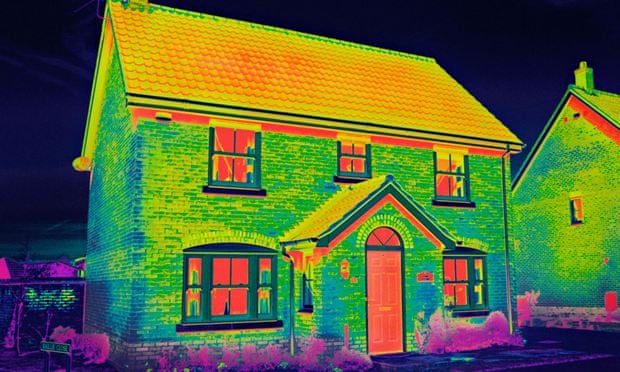
Showing posts with label EPC. Show all posts

Monday, 24 July 2023

Government (might??) Relax EPC Standards for Rental Properties in South London

Eureka! The green tidal wave has been slowed down. Housing Minister Michael Gove has said that the government "should be relaxing the pace" of EPC reforms for rental properties in South London. This means that landlords in the area may have until 2030 to bring their properties up to the new minimum energy efficiency standard of C. The whispers of relaxing the standards were heard following concerns from landlords about the financial impact of the reforms, and the timescale to implement them. Many landlords felt that they would not be able to afford to make the necessary improvements to their properties, and that this would lead to a shortage of rental accommodation in the area. Well, this and of course the constant persecution of landlords in the media, excessive taxation, the general lack of any profits for investors and so on...

In other good news, the government has said that it will provide financial support to landlords to help them meet the new standards. This support will include grants and loans, as well as - hang on to your seat - tax breaks. In a Sunday Telegraph interview following the Uxbridge by-election, Housing Minister Gove gave strong hints that the timetable would change. The paper says: “Mr Gove admitted that in his own department the government was ‘asking too much too quickly’ of landlords, who will be banned from renting out their homes unless they pay for green measures such as insulation and heat pumps to meet a new minimum energy efficiency threshold by 2028.”

The relaxation of the EPC standards would be a welcome move for landlords in South London. It will give them more time to make the necessary improvements to their properties, and it will help to ensure that there is a continued supply of rental accommodation in the area.


What does this mean for landlords in South London?

If you are a landlord in South London, you may potentially have until 2030 to bring your properties up to the new minimum energy efficiency standard of C. Currently it must be a C if you are entering into a new tenancy Band C from 31 December 2025 or existing tenancies from 31 December 2028 (where this is practical and cost-effective). Potentially this kicks the can a little bit further down the road and you will be able to access financial support from the government to help you achieve a better energy performance rating.

The relaxation of the EPC standards is a positive development for landlords, as it will help to reduce the (immediate impact of) the financial burden of the reforms. However, it is important to remember that you will still need to meet the new standards eventually, so you should start planning your improvements now.


What are the benefits of improving the EPC rating of your rental property?

There are a number of benefits to improving the EPC rating of your rental property. These include:

  • Reduced energy bills for your tenants (poor tenants, yes they have it so bad - you should definitely spend four-figure sums of money so they can save £20 a month on their fuel bill, this makes perfect sense!
  • Increased property value - because, ironically, less energy efficient homes will be in lesser demand.
  • Increased rental demand - ironically before the pandemic and energy costs were "normal" I had never once had anyone ask me about the energy rating. Now it's asked before the distance to the tube!

If you are considering improving the EPC rating of your rental property, there are a number of things you can do. These include:

  • Installing insulation
  • Replacing windows and doors
  • Upgrading your heating and hot water system
  • Switching to more energy-efficient appliances
  • You can also help to reduce carbon emissions and contribute to a cleaner environment.

If you have any questions about EPC standards for rental properties in South London, feel free to drop me a line. 

Monday, 3 July 2023

Mortgage company offering BRIBES for energy efficient borrowers!

Bribes all Round!

Well not exactly a bribe, more like a financial incentive. Well that is a bribe. When a mortgage company does it they just call it cashback! Fleet Mortgages is offering landlord borrowers £1,000 cashback if they improve the Energy Performance Certificate (EPC) of their property to a C or above during the initial fixed-rate period. The cashback is available on Fleet's five- and seven-year fixed-rate products, excluding Green options, which complete from July 1.
To secure the cashback, advisers or the landlord borrower must inform Fleet if the EPC level of the property has been improved, and this must be documented on the property's EPC on the EPC register. Fleet Mortgages is the first specialist buy-to-let lender to offer such a cashback incentive. The lender believes that it will help to motivate landlords to make the necessary improvements to their properties, so they can contribute to a greener future and also get money back against the costs of completing those works. More importantly from a selfish point of view they of course want to safeguard their collateral - if the government pushes for better energy ratings and their security properties fall below that


Eco/green

Fleet Mortgages' chief commercial officer, Steve Cox, said: "We're absolutely committed to supporting the UK's transition to a more sustainable future, and to improving the energy efficiency of the country's private rental sector properties. This cashback feature is designed to help landlords make the necessary improvements to their properties, so they can contribute to a greener future for everyone, and also importantly get money back against the costs of completing those works."


Because they say so

The government is expected to mandate that all private rental properties must have an EPC rating of C or above by 2028. Fleet Mortgages' new product is a way for landlords to get ahead of the curve and improve the energy efficiency of their properties sooner rather than later. Draconian measure? Perhaps. But hey, green is good, right?

How eco-friendly is your property right now? Need more tips on future proofing? Check out my stock of tips on the DownToSouthLondon Youtube Channel!

If you are looking for a valuation on your property, then head on over here for a 60 second valuation of your property. Want a visit with more insight? Book a valuation by sending me an email!

Wednesday, 28 June 2023

The future is (less) bright and more energy efficient

Laughable

I never thought I'd say this, having been in property in South London for 20 years - home buyers are now curious as to the energy efficiency of their new home! What was once laughable (Energy Performance Certificates) is now a serious talking point on viewings.

I always used the "how much are the bills?" question as a qualifier on viewings thinking "you really shouldn't be asking that question, it's not going to be significantly different to the place you're in now, surely." However times change! electricity is now 50p/kwh or thereabouts if you're on a good deal, probably 10fold what they were when these energy labels became a (small and insignificant at the time) thing.


Reals before feels

In fact research is suggesting that the energy efficiency is forming a greater part of the buying decision in place of the "feel" and "attraction" of a new home. Who'd have thought?? Certainly not me. Possibly this is an indicator that buyers are stretched beyond belief when budgeting for their mortgage payments and the like... Bad news, but that's a topic for another day. 


The designer sofa is making way for the EV charging point (much to Elon's jubilance I'm sure). Research from Hive (you know, the thermostats) suggests that the top selling points for a British home are solar panels (68% voted number 1) and good roof insulation (67%) valued more than design features such as natural lighting (53%), wooden flooring (22%) and reclaimed woodwork (21%). CRAZY! But true... Leads me to think their pool of respondents needs increasing, but there we are.


EVs for the masses

Despite the electric vehicle craze only 4.5% of British homes own one! Yet the research showed that 39% of respondents would be amenable to a charging point (if they could afford it). It's one of those things that will pay itself back in your grandchildren's lifetime (by which point you would have already sold the home I'm sure). Top on the list of desirable upgrades to no surprise are solar panels, but again the cost is high. Payback period is slightly shorter mind, as the price of electricity seems to be rocketing quicker than the price of bitcoin on a good day (this is more sustained and only going one way).


Boost your property value

Respondents reported being willing to pay an average of £5000 more for an EV charger and generally £11,000 more if the home was thought to be "eco-friendly." So if you drive an EV anyway of some sort then it may be a worthwhile investment as the EV market is set to grow. The sale of combustion fuelled cars will be halted in 2030 so I trust that as we get close to that date the demand will become greater and hence the perceived value. Perhaps your home will become easier to sell over time because of delays installing all these charging points, so for once it is better to get in early. Who knows, I don't have a crystal ball. What I do know is that the narrative is "petrol bad, electric good," so treat your property value with this in mind because sentiment is only going one way.

If you are looking for a valuation on your property, EV charging point or not, then head on over here for a 60 second valuation of your property. Want a visit with more insight? Book a valuation by sending me an email!

Thursday, 29 October 2020

When NOT to improve your property's energy efficiency!

There's a rule for everything, but as most entrepreneurs, I skirt around these (legally of course) to get the most out of things. An intended consequence of the governments energy efficiency drive (in particular to outlaw letting of properties that are rated F and below) was to get landlords to sell up. 

A number of landlords will have thrown in the towel upon hearing that their property can't be brought up to an E rating, and joined those who are sick of the red tape, regulation and taxation surrounding buy-to-let. Fear not, for those die-hard buy to letters like myself there is a way around having to improve your property.

The government has left the door open a crack, for those who are savvy enough to know about these things. Of course these exemptions are buried in the small print. Let's discuss when and how... There's 7 ways to get around having to improve your property you know! 


  1. High cost exemption - The regulations deem it to be unreasonable to have to spend more than £3500 to bring your property up to an E rating. If the cheapest improvement will cost in excess of this you can apply for a "high cost exemption." If one or more bits can be improved for £3,500 or less, and these still fail to improve the property to EPC E, then the ‘All Improvements Made’ exemption should be registered (see number 2). This is for residential properties only.

  2. 7 year payback exemption - irrelevant to residential buy to let but perhaps of interest if you do have commercial property - in a nutshell, if the cost of the energy saving measure will not pay itself back in 7 years.

  3. All improvements made exemption - quite simply, there is nothing more that you can do to improve a property's energy efficiency; applies to both residential and commercial properties.

  4. Wall insulation exemption - where the recommended course of action is to apply wall insulation but the measure is not appropriate for the property, as deemed by expert advice. The advice (by a suitable expert such as a chartered engineer or building surveyor) indicating that due to its potential negative impact on the fabric or structure of the property (or the building of which the property forms a part) would secure this exemption; applies to both residential and commercial units.

  5. Consent exemption - the landlord may in fact be reliant on permissions to install things such as solar panels, insulation and so forth. Where the necessary consents cannot be obtained, for example planning permission is required, the property is in a conservation area, or perhaps freeholder consent is required a landlord may apply for an exemption.

  6. Devaluation exemption - this is of importance for historic buildings and the such - you would be eligible for such an exemption if the value of the property were to decrease by a minimum of 5% after installing energy improvements. Applies to both.

  7. New landlord exemption - whereby the property is newly acquired and there simply has not been ample time to implement any energy saving measures. This is typically in the first 6 months of becoming the landlord, after which the exemption expires. Applies to both residential and commercial properties.

So there you have it, 7 completely legal ways to avoid having to upgrade your rental property. So cancel the sale if you were planning on bailing, there are plenty of ways to keep carrying on (profitably) with buy-to-let! As always I'm happy to help you so do reach out via email. I love to help other investors old and new find their way in the myriad of strategies that are available. Are you looking for coaching, mentoring or simply after a sourced deal? Do check out my personal website to choose a package for you! Don't forget to check out my YouTube channel for more useful information on all things buy-to-let and don't forget to subscribe!


Friday, 26 January 2018

You need to know this if you're letting a property in Clapham (or elsewhere)

Here we go, another regulatory update. You will, as a savvy investor and landlord, know about the various bits of paper that you need to give your new tenants upon move-in. Alas this list is an ever-changing one! This month the government has launched an updated version of the "How To Rent" booklet.


In the know
(Before move-in/signing tenancy agreement you must give the tenant(s) a copy of: (and make sure they are either a pdf via email or hard copy, NOT a link)
1. EPC
2. Gas safety certificate (in date of course and it must be valid for 1 month after the date of move-in)
3. How To Rent Booklet which you can download here
4. Tenancy Agreement


Post Move-in
5. Inventory and check-in report
6. Deposit registration information (within 30 days)


Here are a few important notes:
  • Take special care that you give them an updated version of the HTR booklet (link above)
  • They must have seen the EPC (and if you are letting after 1st April 2018 your property must be rating E or above) before signing the tenancy agreement (so that they will have time to ascertain their outgoings based on the energy efficiency of the property)
  • Not giving the tenant(s) any of the above documents prejudices your position when seeking possession of the property, so make sure that your paperwork is in order!

So there you have it, a brief list of the documents that you need to give your new tenant(s) before they take possession. Make sure that you are complying in order to prevent problems further down the line. If you'd like to read more articles head over to www.claphampropertyblog.com. If you'd like to join me and other local investors for a nice social evening of property come along to the Clapham Property Meet! Hope to see you soon.

Tuesday, 7 November 2017

Video Series - 13/30 - 3 tips to ensure you can keep letting your property after 1st April 2018!


I hope you found that useful! My name is Jeroen Hoppe, professional property investor. If you want to know more about investing in South London where I've lived and worked for nearly 15 years then drop me a line on jeroen@claphampropertyblog.com or come and meet me in person at the Clapham Property meet. Remember to like and share this video if you found it useful! See you next time!

Wednesday, 2 November 2016

Is the end is nigh for bad landlords in Clapham!?

For those of you who managed to make it down to the Clapham Property Meet and heard my eviction talk you will know that there is plenty of regulation to comply with when renting out your property. Get caught out and it could spell disaster. Literally! If you do spell things wrong on a notice then it could mean the invalidity of an important move-out date that you sought, and/or whether a judge will throw out your request for possession, if it does get that far.


But what does all this regulation really mean for renters and landlords in Clapham? Well for starters it will increase barriers to entry. More regulation (or red tape as some people refer to this as) means that it is more difficult for the average man to just start letting out their property. They are made to comply with a myriad of safety checks, and should they not comply the penalties are severe. 

This is a good thing! The private rental sector has improved vastly over the last 50 years, what with the Protection From Eviction Act, Housing Act, and so on and so forth. There isn't a day that goes by without a newspaper reporting on yet another "beds in sheds" case where a landlord lets a property in an overcrowded state or doesn't comply with the various safety protocols that are in place for both single lets and houses in multiple occupation.

There is less and less room for bad landlords these days; one will have to comply and rent their property in a professional manner in order to get the best returns and rent to respectable tenants. Tenants that cut corners are a risk for the landlord I'm sure that you will agree. 

Legislation may not be completely obvious. It is very easy to find a tenant due to the vast demand of rental properties in London, but it is more difficult to comply with legislation and at the same time maximising your investment. Regulation costs money after all - the vast majority of professional tenants don't mind paying that little bit extra to a professional agent or landlord in order to "buy this safety" as it were. There are, of course, still landlords that cut corners, knowingly or unknowingly. For example from 2018 landlords will not be allowed to let out properties that have a Rating of E or better as I mentioned in a post some time ago: https://goo.gl/1FXHpk. 

More legislation that is not immediately obvious is the serving of the government "How to Rent" booklet. A lot of landlords are being caught out with this, because any tenancy that started after October 2015 will be subject to this legislation: if the booklet was not given to the tenant then the service of a Section 21 notice (notice for a landlord to end the tenancy) will not be valid. Can this be done retrospectively? Yes it can, but you can't serve a S21 notice until 6 months down the line.

Some say that "what you don't know won't hurt you" but I think ignorance is not bliss when it comes to renting out a property worth hundreds of thousands of pounds. It is a big risk not to be able to get possession just by not serving a pdf from the internet. Aforementioned are only some of the hidden rules of renting. I am a career property property professional and I have built portfolios for many clients. If you are interested in investing your money in the London property market then I can help you get the best returns whilst complying with all the relevant legislation so that you needn't worry about risking your capital. I offer a range of investment options such as portfolio building for high yield and maximum capital appreciation with hands-off management (armchair investing) or opportunities to invest your money into refurbishment projects for relatively quick returns on your capital. If you are interested in working with me do get in touch on jeroen@claphampropertyblog.com or come down to the Clapham Property Meet and learn more about investing in the London property market.

Monday, 7 December 2015

Changes in 2015 and 2016 that will affect your property investment in Clapham, Brixton and surrounds

Well it's certainly been an eventful year. We've seen a lot of regulatory and taxation changes - we're already seen the results of these in the form of panicked twittering and facebookerings. 

2016 will be no different I'm sure!


So what is causing such a commotion? Well property investors are up in arms about a few things recently, some good, some bad. Let's have a quick reminder of the changes in the recent past, along with announcements for 2016.

Deregulation Act 2015
This covered a few things, but here are the highlights
  • You can't serve S21 if:
    • there are outstanding repairs
    • you are sooner than 4 months into a tenancy
    • the deposit isn't protected
    • you haven't served the tenant with a "how to rent" booklet
    • you haven't given the tenant a valid gas safety cert or EPC
  • You don't need to re-serve the Prescribed information to the tenant(s) upon renewal

From 1st April 2016:
  • Energy efficiency: Compulsory for landlords to make improvements at tenants' requests in order to make the home more energy efficient; and by 1 April 2018 ALL landlords must upgrade the energy efficiency of the rental properties which are rated F and lower to a minimum of E by April 2018 or they will not be allowed to let until such time improvements are made.
  • Tax Changes: Interest relief being reduced to the basic tax rate. Phased in over for tax years starting with year ending March 2017, with the full effect being felt YE 2020.
  • Stamp duty surcharge of 3% added to buy-to-let and second homes. Buying as investment? expect to pay more stamp duty. Primary homes exempt.
  • Right to Rent: Mandatory ID checks for all tenants. Onus on the landlord to determine immigration status
So, it's been an exciting year, but with recent announcements I'm sure 2016 will be an eventful one. I've spoken to many of my fellow investors and they are of the opinion (as am I) that rents will rise astronomically in order to cover the increased running costs. Having said that, the recent changes to push for repairs to be carried out as well as homes to become more energy efficient will certainly improve the quality of homes to rent in the PRS.

What's your view? Feel free to comment below.

If you are looking for your next investment or advice on property and more, feel free to drop me a line on jeroen@claphampropertyblog.com.

Friday, 6 February 2015

EPC - is your property going to fail?

Energy performance certificates have been around for a number of years now; most sellers and landlords will be aware of their existence. They are however probably not aware of their importance. Granted, up until recently they weren't very important; but that is set to change.


When Brussels imposed the EPC legislation on the UK (again the debate of UK's EU membership lights up, but that’s for another day) it was seen by the estate agency as red tape. "Buyers buy because they love the house, its local transport links, visual appeal and suitability to their requirements, not because they are spending less on their energy bill" was the argument from many an agent, me included. In London even more so, with flats being the home of choice for professional sharers and the bulk of properties in London being terraced houses, flats or perhaps even the odd semi-detached house the saving in energy consumption could have meant less than a £30 per month difference between A and F rated properties. Perhaps more so now (energy prices have risen and inflation has devalued our currency since EPC introduction in 2008), but the consensus was that there was very little attention paid to the energy bill when making a purchasing decision.

This is all set to change from 2016 with the introduction of legislation making it compulsory for landlords to make improvements at tenants' requests in order to make the home more energy efficient; and by 1 April 2018 ALL landlords must upgrade the energy efficiency of the rental properties which are rated F and lower to a minimum of E by April 2018 or they will not be allowed to let until such time improvements are made.


So with this in mind, is your portfolio ready for the government’s continued eco agenda?

The £65 landlord register is here - what every Clapham landlord needs to do now

I had a call this week from a landlord who owns one flat near Clapham Common - a flat she used to live in, now let to a lovely couple. ...

Popular Post!